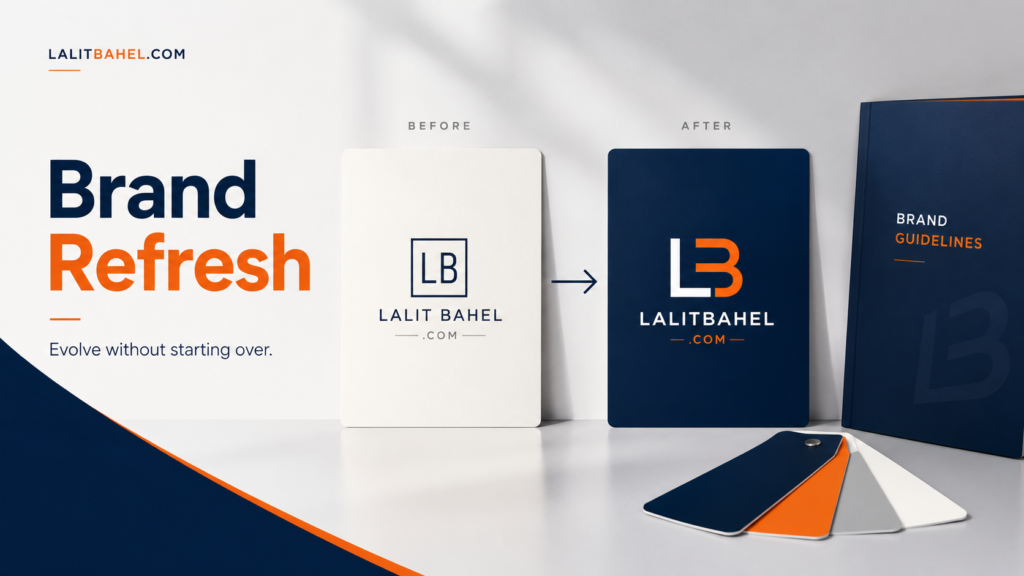
Brand Refresh: When Your Brand Needs to Evolve Without Starting Over
Every brand reaches a point where it no longer perfectly represents what the company has become. The logo that felt fresh at launch starts to look dated. The color palette that differentiated you three years ago is now everywhere in your category. The typography that felt appropriate for a ten-person startup looks amateurish next to the competitors you’ve grown up to face. The photography direction that resonated with your early customers doesn’t speak to the enterprise buyers you’re now targeting.
This is the moment for a brand refresh—not a rebrand from scratch, but a strategic evolution that brings the visual identity current while preserving the recognition and equity your brand has built. The distinction matters because many companies instinctively reach for “complete rebrand” when a refresh would achieve the same goals at a fraction of the cost and disruption.
This guide explains what a brand refresh is, how it differs from a full rebrand, when each is appropriate, and how to execute a refresh that strengthens rather than disrupts your brand equity.
“A brand refresh should feel like meeting someone after a few years and realizing they’ve gotten better with age—recognizable, but improved. Not unrecognizable.” — Debbie Millman
Brand Refresh vs. Full Rebrand: The Critical Distinction
The terms are often used interchangeably, but they describe fundamentally different scopes of work with different strategic objectives:
A full rebrand is appropriate when:
- The company has fundamentally changed its business model, product, or market
- The brand is associated with negative events that require dissociation
- A merger or acquisition creates a new combined brand
- The existing brand has no meaningful equity to preserve
A brand refresh is appropriate for everything else. If your company is essentially the same business it has been but the visual identity hasn’t kept pace with your growth and market position, a refresh is the right tool.
The Five Signs You Need a Brand Refresh (Not a Rebrand)
1. Your Brand Looks Dated Against Current Competitors
Visual conventions evolve. A logo and color system designed in 2016 will feel noticeably older than one designed in 2023, even if both were high-quality work at the time. If your competitors’ visual identities are consistently perceived as more modern and polished than yours, that perception is costing you in sales conversations, hiring, and investor impressions.
2. You’ve Expanded Significantly But Your Brand Hasn’t
A brand built for a five-person startup often lacks the versatility and comprehensiveness needed for a fifty-person company. You may not have all logo variants, a complete color system, typography guidelines, or an imagery direction. A brand refresh fills these gaps without replacing what exists.
3. Your Marketing Materials Look Like They Came From Different Companies
As companies grow and add team members and vendors who each make brand decisions without consistent guidelines, the brand fragments. The website looks like one brand. The sales deck looks like another. The product screenshots look like a third. A brand refresh can consolidate these divergent applications into a coherent, consistent system.
4. You’re Entering New Markets or Audiences
Expanding from SMB to enterprise, from B2C to B2B, or from domestic to international markets may require visual identity adjustments—not wholesale replacement, but recalibration of the elements that signal appropriateness for the new audience.
5. You Can’t Articulate a Clear Brand Story
Sometimes the signal for a brand refresh isn’t visual—it’s strategic. If your team can’t articulate consistently what your brand stands for, who it’s for, and why it looks the way it does, you’re probably missing the strategic foundation that makes visual decisions coherent. A refresh that starts with brand strategy before touching design solves both the visible symptoms and the underlying cause.
What a Brand Refresh Typically Includes
Logo Evolution
Not replacement, but refinement. A logo evolution modernizes the existing mark: refining proportions, simplifying details for digital contexts, adjusting weight for better reproduction at small sizes, or updating the typeface while preserving the form. The goal is to make the logo look like it was designed recently while remaining recognizable as the same brand.
Color System Update
The primary brand colors may be retained or subtly adjusted (a shift in hue or saturation, not a color change). The bigger opportunity is usually in building out the secondary and neutral palette: adding supporting colors that give the system more flexibility, removing colors that have accumulated without intention, and establishing clear usage hierarchy that was missing before.
Typography System
Typography updates can have a dramatic effect on brand modernity without any change to the logo or primary colors. Switching from a 2015-era web font to a current, carefully chosen typeface—while maintaining the personality direction—often produces the biggest modernization impact per dollar of the entire refresh.
Imagery and Photography Direction
Art direction updates are often the fastest and cheapest way to significantly refresh a brand’s appearance. Changing the photographic direction—from posed stock imagery to authentic documentary photography, or from lifestyle imagery to product-focused imagery—transforms how the brand feels across every content surface without touching the structural identity elements.
Updated Brand Guidelines
The output of a brand refresh is comprehensive, current guidelines that address every gap and inconsistency identified in the audit. These guidelines enable the entire organization to apply the refreshed identity consistently.
Asset Refresh
Applying the refreshed identity to existing templates: business cards, email signature, presentation template, proposal template, social media profile images. The scope of asset refresh depends on the number of existing touchpoints.
The Brand Refresh Process: Step by Step
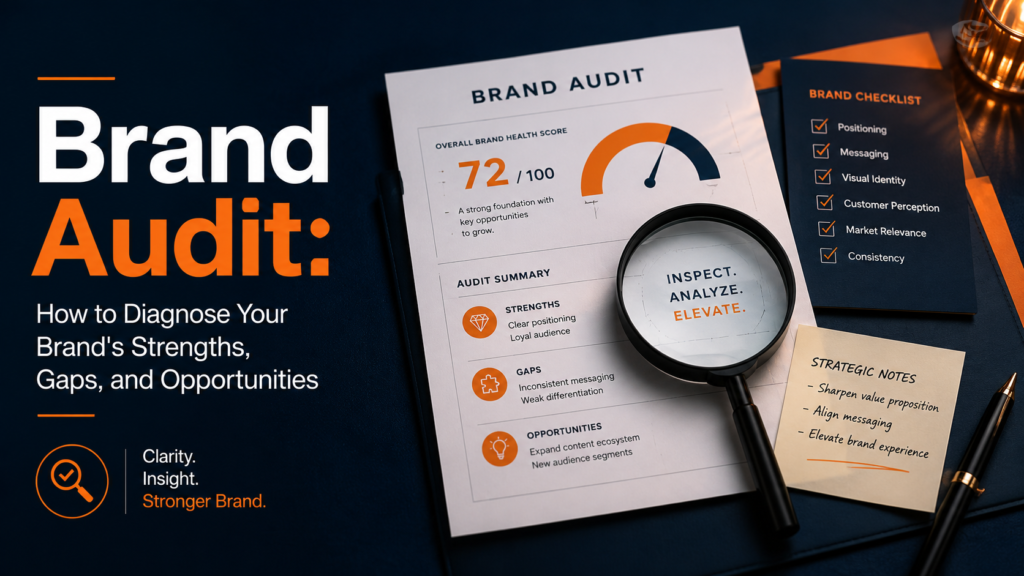
Step 1: Brand Audit
Document the current state of the brand across every touchpoint. Collect examples from: website, social media profiles, email communications, sales materials, product UI, business cards, and any advertising or marketing materials. Inventory all existing brand assets. Identify every inconsistency and gap. This audit becomes the brief for the refresh.
Step 2: Equity Assessment
Determine what elements of the current brand carry equity worth preserving. Test with a sample of current customers if possible. Elements with strong positive recognition should be treated as anchors for the refresh—preserved and modernized, not replaced.
Step 3: Competitive Analysis
Map the current visual landscape of your category to identify where you sit, where your competitors cluster, and where the differentiation opportunities are. This analysis ensures the refresh moves you toward distinctiveness, not away from it.
Step 4: Concept Development
The designer develops 2–3 refresh directions showing how the identity evolution might look. Unlike a full rebrand, refresh concept directions should show clear continuity with the current brand while demonstrating the modernization and improvement.
Step 5: Refinement and System Build
The selected direction is refined and the full system built: all logo variants, complete color palette, typography hierarchy, imagery direction, graphic elements, and the complete guidelines document.
Step 6: Staged Rollout
A brand refresh rollout should be staged: digital assets first (website, social, email), then printed materials (as existing stock is depleted), then environmental and signage. A controlled rollout prevents the brand from appearing in two different states simultaneously across major touchpoints.
For the full context of what a brand design system includes and how it evolves over a company’s lifecycle, see the brand design guide and the branding strategy overview for startups.
How to Communicate a Brand Refresh to Your Audience
Brand refreshes generally don’t require the same level of public announcement as a full rebrand. In most cases, the best approach is a soft transition: simply update your assets and let the new identity appear naturally across your touchpoints. Most customers will notice the improvement subconsciously without being prompted to compare old and new.
Exceptions where some announcement is appropriate:
- When the changes are significant enough that longtime customers might genuinely be confused
- When the refresh coincides with other strategic announcements (new funding, new product, expansion into new markets)
- When you want to use the refresh as a content marketing opportunity (writing about why you updated the brand can generate genuine interest from your audience)
What to avoid: over-explaining the brand refresh in ways that invite comparison between old and new. The visual quality of the new identity should speak for itself. If you need to defend the changes, the changes probably aren’t sufficient.
For startups and growing companies considering whether a refresh or a full rebrand is the right investment, the branding and identity design service includes discovery work that clarifies the right scope before any design begins. To start a conversation about your specific situation, reach out with where your brand is today.
Is Your Brand Ready to Look as Good as Your Business Has Become?
A brand refresh is one of the smartest investments a growing company can make: it brings your visual identity current, fills the gaps that have accumulated with growth, and gives your whole team a consistent, professional system to work from—without the cost and disruption of starting over.