Brand Design Is Strategy Made Visible
Most businesses approach brand design as an aesthetic exercise: pick colors, choose a logo, select a font. The result is usually something that looks acceptable and means nothing — a visual identity that doesn’t differentiate, doesn’t resonate with the people it’s supposed to reach, and doesn’t hold up as the business grows.
The companies with the strongest brand design didn’t start with aesthetics. They started with answers to harder questions: Who are we building this for, exactly? What do we believe that our competitors don’t? What feeling should every interaction with our brand create? The visual system came after those questions were answered — and the design became the expression of clear thinking, not a substitute for it.
This guide covers what brand design actually is, how it’s different from a logo or a visual identity, how the best brand design projects are structured, and what to look for when choosing a brand designer for your business.
“Design is the silent ambassador of your brand. Every color, font, and line communicates something — whether you intend it to or not.”
— Paul Rand, graphic designer and creator of the IBM, ABC, and UPS logos
What Brand Design Covers
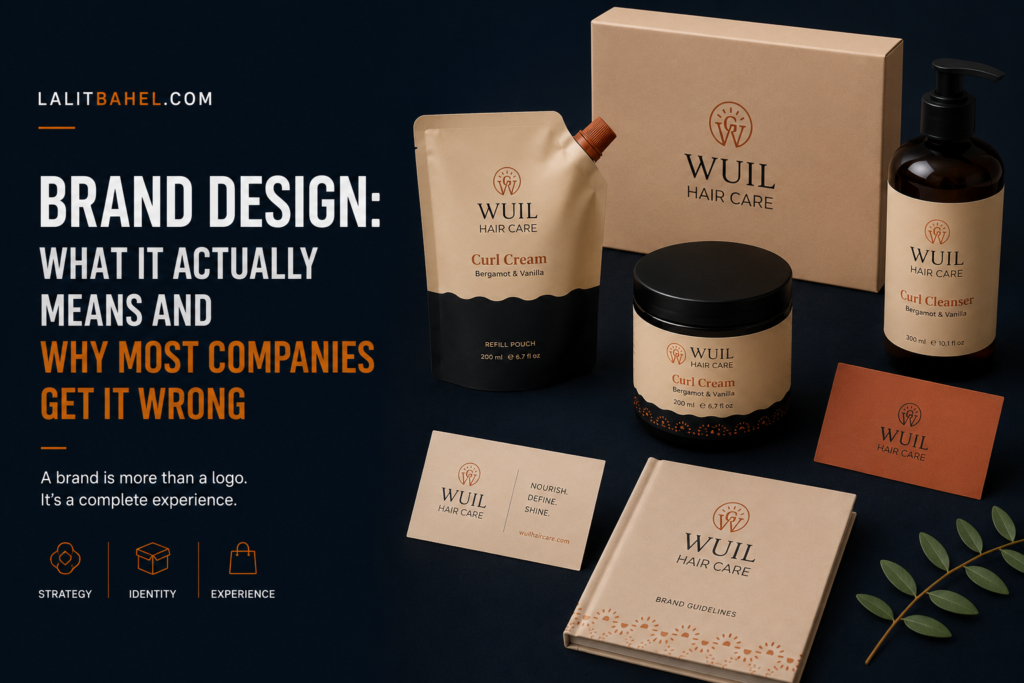
Brand design is the process of creating the visual and verbal expression of a brand’s identity. It encompasses more than any single deliverable and spans multiple connected elements that work together as a system.
Brand Design vs. Logo Design vs. Visual Identity: The Differences
These terms are used interchangeably in the market, but they describe different scopes. Understanding which one you actually need prevents mismatched expectations and budget allocation.
Logo design is the creation of a single visual mark. A logo design project typically delivers the primary logo, one or two variants, and basic file formats. It’s the most limited scope — appropriate for the earliest stage of a business, or for updating an existing mark that’s otherwise working well.
Visual identity design extends the logo into a full visual system: color palette, typography, application templates, and usage guidelines. This is what most businesses actually need when they think they want “brand design.”
Brand design encompasses everything in visual identity plus strategic layer: brand positioning, competitive differentiation, personality attributes, and verbal identity (tone of voice, messaging hierarchy). Brand design treats the business’s strategic challenge as the brief and delivers a visual and verbal system that solves it. This is the appropriate scope for any business making a serious investment in brand as a growth driver.
Why Brand Design Matters at Every Stage
Pre-Revenue
Brand design at the pre-revenue stage is about establishing credibility. A company without a product that ships needs to earn trust through presentation: the landing page, the pitch deck, the founder’s LinkedIn, the early social media presence. Brand design creates the signal of seriousness that makes early adopters willing to give their email address, try a beta, or recommend the product to a colleague before there’s evidence it works.
Early Growth
At early growth stage, brand design’s job shifts to conversion. Every page visit, social impression, and outbound email either moves someone toward a purchase or doesn’t. A brand with clear, differentiated design — a homepage that communicates who it’s for and why it’s better in seconds — converts better than a brand that looks generic. The compounding effect of consistently higher conversion rates across a growing traffic base is significant.
Scaling
At scale, brand design’s job is consistency across a growing team. As more people produce more content across more channels, the brand’s coherence erodes unless the design system is strong enough and the guidelines are clear enough to keep everyone aligned. Companies with strong brand design at scale look and sound like one coordinated organization; companies without it look like five different teams operating independently.
Brand design services
Brand design that starts with strategy, not aesthetics.
Visual identity, brand voice, positioning, and design system — built around what your business needs to achieve, not just what looks good.
How a Good Brand Design Project Is Structured
Strategy First
Any brand design project worth doing starts with a strategy phase. This isn’t a formality — it’s the work that determines whether the visual output is right or wrong. Strategy covers: who the target buyer is (specifically, not generically), what the brand’s competitive positioning is, what attributes the brand should embody, and what the visual conventions of the category are — and where the opportunity to differentiate from them lies.
A brand designer who asks “what colors do you like?” before asking “who are you trying to reach?” is working from aesthetics rather than strategy. The questions a designer asks in the brief phase tell you more about their capability than any portfolio.
Concepts Before Execution
After the strategy phase, two or three genuinely distinct visual concepts are developed. Not color variations of the same direction — fundamentally different approaches to the strategic brief. Each concept is shown applied to the primary use cases so the selection can be made based on how the system works in context, not just how the logo looks in isolation.
Refinement Within the System
The selected concept is developed into a complete system through structured revision rounds. Typography is finalized, color is calibrated across all contexts (digital screen, CMYK print, environmental), the logo variants are created for every necessary application, and the first set of applied templates is built. The output is a design system, not a one-off piece of creative work.
Documentation and Handoff
The brand guidelines document is the product that makes all the other work durable. It covers every element of the system with clear examples, rules, and common application scenarios. File formats are organized: vector source files, optimized raster exports for every use case, font licensing documentation, and editable templates for common outputs (email signature, presentation deck, social media). A brand design project without thorough documentation doesn’t outlast the project itself.
What Brand Design Costs
Scope drives cost. Here are the typical investment ranges for different scopes of brand design work.
For startup and early-growth businesses, the investment in full brand design tends to return significant value through improved conversion, faster sales cycles, and the compounding advantage of brand recognition built consistently over time. Founders who scale efficiently tend to view brand design as infrastructure, not marketing spend — it’s the system that makes every future marketing dollar work harder.
Brand Design for Founders and Personal Brands
Many founders operate as both the face of a company and an individual brand presence — on LinkedIn, in industry media, as a speaker or thought leader. When the personal brand and the company brand aren’t designed to work together, they create visual fragmentation: the founder’s presence looks like a different organization than the company. A personal branding designer for founders and CEOs approaches this intersection explicitly, designing a personal visual identity that amplifies the company brand rather than competing with it.
For founders building companies in the startup ecosystem, the personal and company brand are often inseparable in the early years. Investing in both, as a connected system, creates a multiplying effect: each channel (LinkedIn posts, company website, conference talks, media appearances) reinforces the same positioning and visual identity rather than fragmenting it. The same thinking that applies to startup design broadly applies here — build the system once, execute it consistently, let it compound.
When to Rebrand: Signals Your Current Brand Design Is Holding You Back
Rebranding is expensive, disruptive, and time-consuming. It’s also sometimes the highest-leverage investment a company can make. Understanding the difference between a brand that needs refinement and a brand that needs replacement prevents both premature rebrands and the more common mistake of holding on too long to a brand that’s actively costing the business.
Signal 1: Your Positioning Has Changed But Your Brand Hasn’t
The most common trigger for a rebrand is a strategic pivot that wasn’t reflected in the visual identity. A company that started as a generalist digital agency and repositioned as a specialist in healthcare SaaS implementation needs a brand that communicates the new positioning — not the old one. When the brand and the positioning are misaligned, every customer touchpoint creates confusion: the website signals one thing, the sales team says another, and the brand is working against conversion instead of supporting it.
Signal 2: You’re Losing Enterprise Deals to Brand Perception
Enterprise buyers are committee decisions. Not every committee member attends the product demo. Some evaluate the vendor solely through the website, the proposal, and the sales materials. When a brand that was built for an early-stage customer profile is asked to communicate credibility to enterprise procurement, it often fails — not because the product is wrong, but because the visual identity signals the wrong maturity level. If enterprise sales feedback consistently includes comments about brand professionalism or visual polish, the brand is costing deals.
Signal 3: Your Competitive Set Has Moved and You Look Like Everyone Else
Brand differentiation is relative to the competitive set at a given moment. A brand that was distinctive three years ago may now look identical to five competitors who have adopted similar aesthetics. When visual conventions spread across a category — as they do in SaaS, where dark mode interfaces, gradient backgrounds, and specific icon styles propagate rapidly — early movers who don’t refresh risk looking like followers rather than leaders. A category audit that maps the visual conventions of all major competitors reveals whether your brand is still differentiated or whether it has been absorbed into the category aesthetic.
Signal 4: The Brand Can’t Scale Across New Products or Markets
A brand designed for one product in one market often breaks when the company adds a second product or enters an international market. The logo doesn’t translate. The color system doesn’t accommodate a distinct sub-brand. The name has trademark conflicts in new geographies. These are architecture problems that require systematic brand redesign — not just visual refreshes. Companies that hit these ceilings at growth stage almost always wish they had built a more scalable brand architecture at seed.
Signal 5: The Founder Has Outgrown the Brand
In founder-led companies, the brand often reflects the founder’s aesthetic preferences and context at the time of founding — which may be several years and several stages of maturity ago. When a founder presents at a major conference, appears in industry media, or raises a significant funding round, they represent a company that has grown substantially. A brand that was appropriate at $500K ARR may actively undermine credibility at $5M ARR. This is not vanity — it’s the recognition that brand perception has real commercial consequences, and that updating the brand to match the company’s actual market position is a business decision, not an aesthetic one.
What a Rebrand Involves vs. a Brand Refresh
Not every brand problem requires a full rebrand. A brand refresh updates the visual system within the existing strategic foundation: the logo evolves rather than is replaced, the color palette is refined rather than replaced, the guidelines are extended rather than rewritten. A full rebrand changes the strategic foundation: new positioning, potentially a new name, a new visual system built from different strategic premises. The right approach depends on whether the problem is execution (wrong application of the right strategy) or strategy (the wrong positioning regardless of how it’s executed).
Work With a Brand Designer Who Leads With Strategy
Lalit Bahel’s brand design practice starts with positioning and differentiation work before any visual design begins. Every engagement delivers a complete brand system — logo, color, typography, voice, and guidelines — built around what your business needs to achieve with its brand, not just what’s aesthetically interesting.
Brand design
A brand that works — visually and strategically.
Strategy-led brand design for startups, B2B companies, and founders. Visual identity, brand voice, and guidelines that get used — not just delivered.