Employer Branding: How to Build a Company Reputation That Attracts Top Talent Before You Post a Job
In a labor market where exceptional candidates have choices, the companies that win the talent competition are not necessarily the ones with the highest salaries or the most prestigious names. They’re the ones whose reputation in the employment market — their employer brand — creates genuine attraction before a job is ever posted. Candidates hear about the company from friends who work there, from content they’ve followed, from the culture signals embedded in everything from the website careers page to how the company responds to Glassdoor reviews.
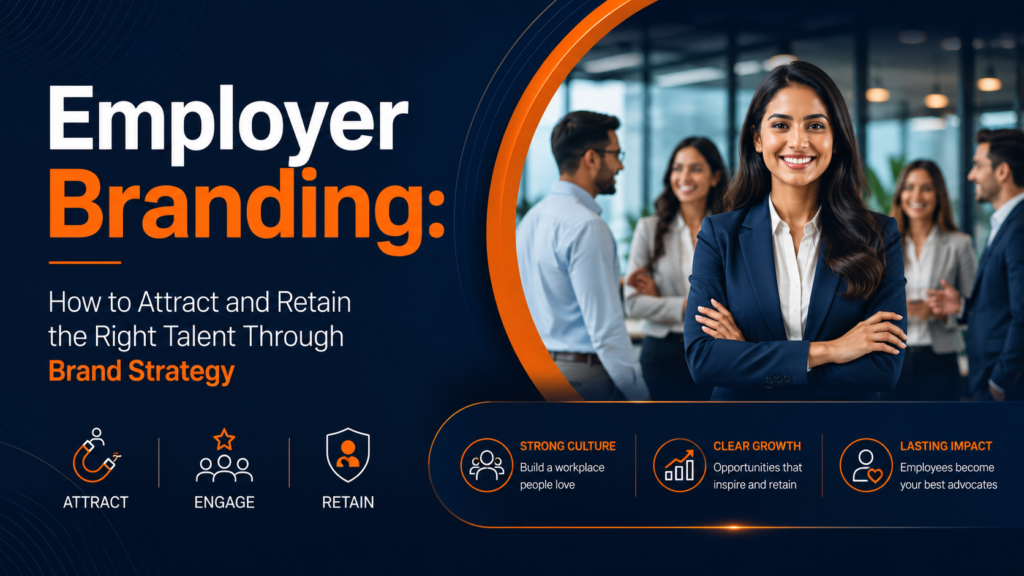
Employer branding is the deliberate management of this reputation. It’s the intersection of who you actually are as an employer and how effectively you communicate that to the talent market. Built well, it reduces time-to-hire, improves quality-of-hire, reduces recruiting costs, and improves employee retention. Neglected, it leaves your recruiting team fighting for candidates who already preferred a competitor before the first conversation.
This guide explains what employer branding is, how it differs from corporate branding, what the critical touchpoints are, and how to build an employer brand strategy that creates durable talent attraction.
“Your employer brand is what people say about working at your company when you’re not in the room. Employer branding is deciding what you want them to say — and earning it.” — LinkedIn Talent Solutions
Employer Brand vs. Corporate Brand: The Relationship
The employer brand and the corporate brand are related but distinct. The corporate brand is the promise made to customers: what you do, who you do it for, and why it matters. The employer brand is the promise made to employees and candidates: what it’s like to work here, what you’ll learn, how you’ll be treated, what you’ll be part of.
The two brands should be coherent but not identical. A consumer brand known for innovation should have an employer brand that communicates what innovation looks like as an employee experience. A brand known for customer-centricity should be able to demonstrate that the same values extend to how it treats its people. When corporate brand and employer brand diverge — when a company publicly champions customer service but treats employees poorly — the resulting dissonance is visible on Glassdoor and costs the company in both talent and customer trust.
The Business Case for Employer Branding Investment
The compounding effect of these improvements makes employer branding one of the highest-ROI investments available to growing companies. Reducing cost-per-hire, improving retention, and increasing candidate quality all have direct financial impact that outpaces the investment required to build a strong employer brand.
The Four Components of Employer Brand
1. Employee Value Proposition (EVP)
The EVP is the core of employer branding: the set of offerings, opportunities, and experiences that employees receive in exchange for their skills, capabilities, and commitment. A strong EVP is specific, authentic, and differentiated — it describes what’s genuinely unique about working at your company, not a generic list of standard employment benefits.
The most compelling EVP components vary by talent segment but typically include:
- Mission and impact: What the work contributes to, beyond the immediate job tasks
- Growth and learning: How employees develop their skills and career while at the company
- Culture and environment: What the day-to-day experience feels like
- Compensation and benefits: The financial and material dimension of the exchange
- Leadership and management: The quality and style of leadership candidates will experience
The EVP should be developed from employee research, not from leadership aspiration. Survey current employees — especially high performers — about why they stay, what they find most valuable, and what they tell friends about working there. The authentic EVP lives in those responses.
2. Employer Brand Identity
The visual and verbal expression of the employer brand. This is where the employer brand intersects with the design and communications function: careers page design, job posting tone and structure, offer letter and onboarding materials, employer-focused social media content, recruitment videos, and the visual treatment of company culture content.
Employer brand identity should be visually consistent with the corporate brand identity while having its own tone and content direction. The corporate brand targets customers; the employer brand targets candidates. The audiences are different; the design language should be coherent but the content strategy should be adapted.
3. Employee Experience
Employer branding makes promises. Employee experience either fulfills them or exposes them as fiction. A company can invest significantly in employer brand content and see zero ROI if the actual employee experience — the onboarding process, the management quality, the work environment, the growth opportunities — doesn’t match what was communicated.
Employee experience investment (improving the actual experience of working at the company) and employer brand investment (communicating that experience effectively) must be developed together. Employer brand without employee experience investment produces short-term attraction and long-term attrition and Glassdoor damage.
4. Employer Brand Channels
Where the employer brand is communicated:
- Careers page: The most important employer brand asset — the destination candidates visit when they’re actively considering the company
- LinkedIn Company Page: The primary professional social discovery channel for employer brand content
- Glassdoor / Indeed / Comparably: Third-party review platforms where candidates research employer reputation
- Employee social media: What current employees say publicly about the company — amplification of authentic employee perspective
- Recruiting conversations: How recruiters and hiring managers represent the company in conversations with candidates
- Offer letters and onboarding: The formal employment brand experience at the moment of commitment
Building an Employer Brand Strategy: Step by Step
Step 1: Conduct an Employer Brand Audit
Before building or rebuilding your employer brand, understand its current state. Collect: recent Glassdoor and Indeed reviews (positive and negative themes), exit interview data (why do people leave?), stay interview data (why do high performers stay?), candidate experience feedback, and an audit of all employer-facing content. This audit establishes the baseline and identifies the most significant gaps between current perception and desired perception.
Step 2: Define Your Ideal Candidate Persona
Who specifically are you trying to attract? Different roles require different employer brand messages. The values and priorities of a senior engineer differ from those of an early-career marketer. A high-growth startup trying to recruit from FAANG companies needs to communicate differently than one trying to attract recent graduates.
Define 2–3 candidate personas for the roles most critical to your growth. For each persona: what do they value in an employer? What concerns do they have about joining a startup or smaller company? What do they currently believe about your company based on public signals? What would change their minds?
Step 3: Develop Your EVP
Based on employee research and candidate persona analysis, articulate the 3–5 core pillars of your EVP — the reasons your best candidates choose you and your best employees stay. Each pillar should be specific, verifiable, and genuinely differentiating.
Generic EVP pillars to avoid: “great culture,” “work-life balance,” “competitive compensation,” “growth opportunities.” These appear on every company’s employer brand and communicate nothing. Specific EVP pillars that work: “Weekly 1:1s with the CEO for every engineer in the first year,” “Our eng team ships to production daily — no bureaucratic release cycles,” “Every employee participates in quarterly offsites where we debate product direction.”
Step 4: Build the Content and Channels
With the EVP defined, build the content that communicates it across the key employer brand channels. Priority order:
- Careers page (redesign to reflect the EVP, with employee stories, team photos, and specific culture content)
- LinkedIn company page and content calendar (regular employer brand content: team spotlights, day-in-the-life content, culture moments)
- Respond to Glassdoor reviews (demonstrate that leadership reads and responds to feedback — itself an employer brand signal)
- Employee advocacy program (equip and encourage employees to share authentic perspectives about their work)
Step 5: Measure and Optimize
Employer brand effectiveness is measurable. Track: careers page conversion rate (visitors who apply), offer acceptance rate (the best single measure of employer brand strength), candidate source quality (which channels produce the candidates most likely to accept and stay), and employee NPS (how likely current employees are to recommend the company as a place to work).
Employer Branding for Startups: Competing Without the Brand Name
Startups face a specific employer brand challenge: competing for talent against companies with established brand names, higher salaries, and more recognized benefits packages. The employer brand advantages available to startups are real but require deliberate communication:
- Mission proximity: At a startup, every employee’s work has more visible impact on the outcome. This proximity to mission is genuinely valued by candidates who want their work to matter.
- Equity: Early-stage equity is a real financial consideration for candidates willing to trade some salary certainty for upside. Communicate it clearly, with enough context about the company’s trajectory to make the calculus meaningful.
- Speed of learning: The compressed learning curve of startup environments is a genuine differentiator for early-career candidates who want to develop faster than corporate structures allow.
- Access to leadership: The founder-proximity available at small companies is valued by candidates who want mentorship and visibility that large organizations don’t provide.
For the visual design of employer brand materials — careers pages, recruitment decks, and culture content — see the branding and identity design service. For how employer brand connects to the full company brand strategy, see the brand identity design services guide.
Build the Talent Attraction Advantage You Can’t Buy With Salary
The strongest employer brands attract candidates who chose the company before they saw the job posting. That kind of attraction is built over time, with consistency and authenticity — and it compounds. The best time to start is now. Let’s build yours.