Your Brand Is Not Your Logo
Most founders discover this the hard way. They spend $300 on a logo, build a product people actually want, and then hit a wall: enterprise prospects don’t take them seriously, the website looks like it was built by a different company than the pitch deck, and the sales deck uses four different shades of blue. The logo was fine. The brand was a mess.
Brand identity design services exist to solve exactly this problem — not by making things prettier, but by making every customer touchpoint say the same thing about your business. This guide explains what those services actually include, what they cost, and how to choose the right designer when you’re ready to invest.
“A brand is the set of expectations, memories, stories and relationships that, taken together, account for a consumer’s decision to choose one product or service over another.”
— Seth Godin
What Brand Identity Design Services Actually Cover
The term gets used loosely, so let’s be specific. A proper brand identity system delivered by a professional designer includes several interconnected components — none of which are optional if you want the result to hold up at scale.
For SaaS companies in particular, voice consistency across the product UI, marketing site, and sales materials is one of the most undervalued growth levers. If you’re building in that space, it’s worth understanding what a SaaS brand identity system should include before you brief a designer — the scope is broader than most founders expect.
Why Startups Need This Before They Think They Need It
The most common objection: “We’re not big enough yet.” Here’s the problem with that logic. Brand consistency is not a luxury you add when revenue hits a threshold — it’s a prerequisite for hitting that threshold in the first place.
Consider the sales cycle. A prospect who finds your company through LinkedIn sees a certain look. They visit your website and see a slightly different look. They download a case study that uses different fonts. By the time they’re in a demo, they’ve already formed a subconscious opinion about how organized your company is, how much attention you pay to detail, and by extension, whether your product is likely to be polished or rough. That opinion was formed by your brand before you said a word.
“Design is not just what it looks like and feels like. Design is how it works.”
— Steve Jobs
Founders building in the B2B space are often surprised to learn how much brand identity affects close rates at the enterprise level. Procurement teams and committee buyers look for signals of stability. A coherent visual identity is one of those signals — not because they’re shallow, but because brand cohesion correlates with operational maturity. Companies that can’t present themselves consistently often can’t execute consistently either. Right or wrong, that’s the inference buyers draw.
The ROI math also works differently than most founders expect. Investing in professional brand identity design services early means every subsequent piece of content — every blog post, social graphic, investor deck, and email template — gets built on a solid foundation. The alternative is paying for a rebrand later, which costs significantly more because it requires updating everything that already exists, not just creating new assets from scratch. Founders who’ve been through a rebrand at Series A typically wish they’d done it right at seed. Bootstrapped founders scaling through revenue milestones face the same issue — systems built right early are one of the reasons bootstrapped founders who scale to $1M in revenue cite operational consistency as a key factor in their growth.
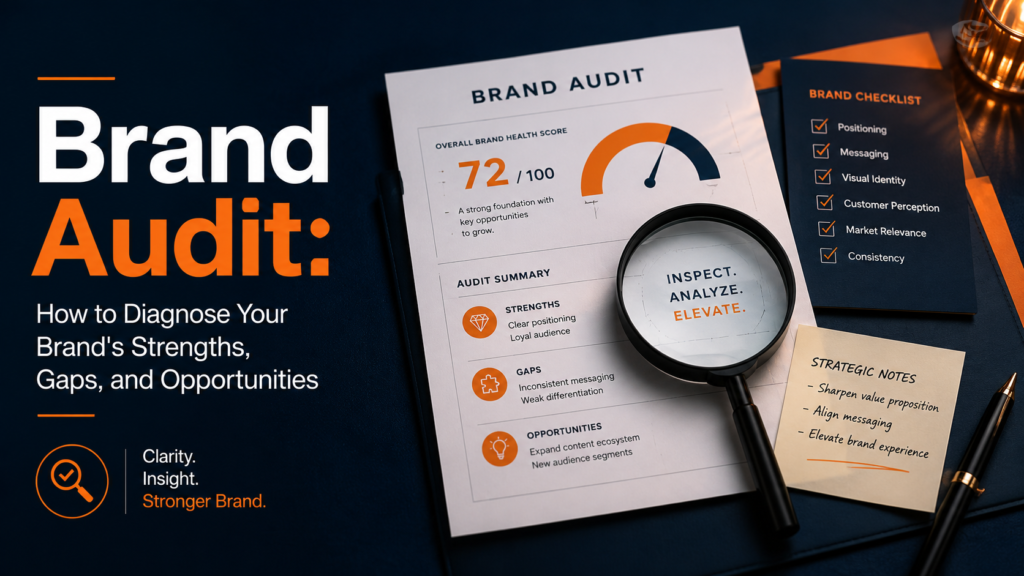
Free brand audit
Is your brand holding your business back?
Get a 15-minute brand review — I’ll look at your current identity and tell you honestly what’s working, what’s broken, and what to fix first. No pitch, no obligation.
Logo Design vs. Brand Identity: The Distinction That Saves You Money
If a designer offers you “brand identity” and delivers only a logo and a color palette, you haven’t received brand identity design services — you’ve received logo design at brand identity prices. Know the difference before you sign a contract.
Recognition compounds over time. Every time a prospect sees a consistent presentation of your brand — the same colors, the same font weight, the same visual logic — you’re building an impression without paying for another touchpoint. Founders building SaaS businesses find that brand consistency directly affects conversion at every stage of the funnel — the same principle applies whether you’re refining your SaaS sales funnel or pitching enterprise buyers in person.
The Brand Identity Design Process: What to Expect
Good work follows a structured process. If a designer jumps straight to logo options without asking you a lot of questions first, that’s a red flag. Here’s what a professional engagement looks like from start to finish.
1. Discovery
Before any design work begins, a strong designer needs to understand your business deeply. Who are your customers? What do they believe before they meet you, and what do you need them to believe after? Who are your competitors, and how do you want to be positioned relative to them? What are three adjectives you’d use to describe your brand, and three you’d actively want to avoid?
This phase typically involves a questionnaire or a structured interview session. The output is a creative brief that both parties sign off on before any visual direction is explored. Skipping this step produces logos that look nice in isolation but don’t mean anything specific — which is almost worse than a generic logo because it costs more and still doesn’t work.
2. Strategy and Positioning
Some brand identity design services include a positioning strategy component; others focus purely on visual execution and assume the positioning work has already been done. If you haven’t defined your brand’s positioning — your category, your differentiation, and the one job your brand needs to do for the buyer — this is worth doing before design begins. A designer can execute on a clear brief. Very few can manufacture a business strategy.
3. Concept Development
The designer develops two or three distinct visual directions — not variations on the same idea, but genuinely different approaches to solving the brief. Each direction includes a logo, a color palette, typography, and enough application to make the direction feel real. This is where most clients want to jump to immediately, and most designers should make them wait.
4. Refinement
You choose a direction (or a clear hybrid of elements from multiple directions) and the designer refines it based on your feedback. This phase involves one or two rounds of structured feedback — not open-ended “try this, try that” sessions, but specific responses to the design that the designer can act on. The number of revision rounds is usually defined in the contract.
5. Delivery and Handoff
Final files in every format you’ll need: SVG and EPS for print, PNG and WebP for digital, font files or licensing information, the brand guidelines PDF, and all template files. A good designer also walks you through what each file is for and when to use it. This handoff meeting is often overlooked but worth insisting on.
How Much Do Brand Identity Design Services Cost?
Pricing varies significantly based on the scope of deliverables, the experience level of the designer, and whether you’re working with a solo designer or an agency. Here’s a realistic breakdown.
This is generally the best tier for early-stage startups and founders who want direct access to the person doing the work. You’re not paying agency overhead, and you can often get faster turnaround with more direct communication. The risk is that quality varies significantly — the vetting process matters. If you’re a founder building a personal brand alongside your company, a specialist in personal branding for founders and CEOs will approach the brief differently than a generalist — and that difference shows in the outcome.
“Every great design begins with an even better story.”
— Lorinda Mamo, brand designer
How to Choose the Right Brand Identity Designer
The portfolio is the starting point, not the ending point. Use this checklist when evaluating any designer before you hire.
What Makes a Brand Identity System Last
The brands that stay consistent over years share a few structural characteristics that are worth building in from the start.
A small, opinionated color palette. Two primary colors and one accent color is almost always enough. More than that and the system becomes hard to apply consistently without training. The best brand palettes feel obvious in retrospect — they had to be those colors.
One workhorse typeface. Many strong brand identities use a single typeface across all applications, varying only in weight and size. This creates coherence that’s impossible to achieve with five different fonts used interchangeably. The secondary typeface, if there is one, should have a clearly defined role — headlines only, or body copy only — not overlap with the primary.
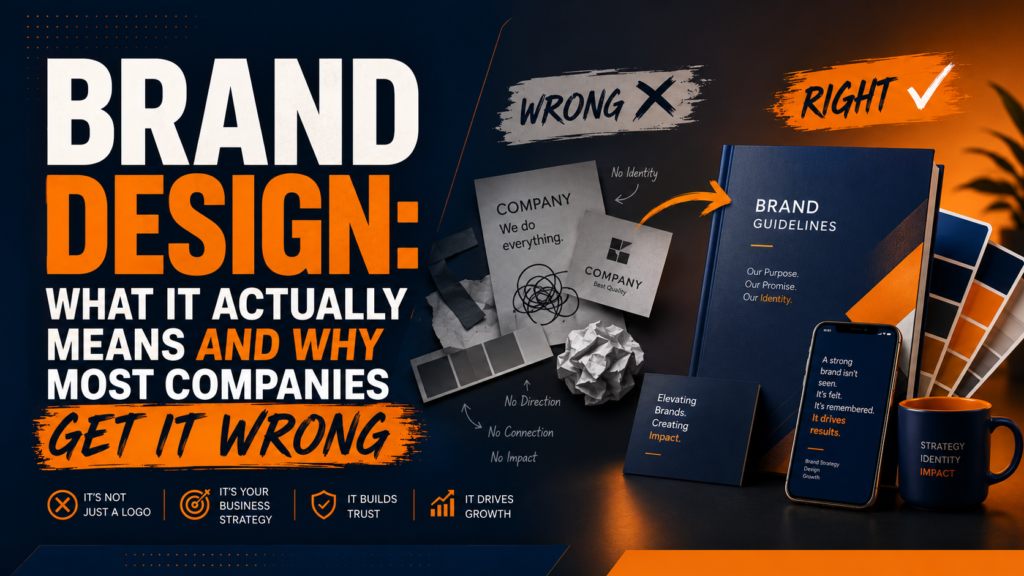
Guidelines with examples, not just rules. A brand guidelines document that tells you what to do without showing you what it looks like in practice gets ignored. The most useful brand guidelines include side-by-side comparisons of correct and incorrect usage, annotated examples of real applications, and enough visual coverage that someone new to the brand can apply it correctly without supervision on day one.
Built-in flexibility. A brand identity system that can’t adapt to new contexts breaks when the business grows. Good systems account for this: the logo works at 16px and at 16 feet. The color palette works in full color and in single-color print. The typography works in print and in digital interfaces. Flexibility doesn’t mean anything goes — it means the system was designed with real-world applications in mind, not just a brand presentation.
Ready to Build a Brand Identity That Converts?
Lalit Bahel offers professional branding and identity design services for startups, founders, and B2B SaaS companies. Every engagement starts with a structured discovery process and delivers a complete identity system — logo, color, typography, voice, templates, and guidelines — designed to hold up as your company grows.
Work with Lalit
Build the brand your business deserves.
Logo system, color palette, typography, brand voice, asset templates, and guidelines — everything a growing company needs to show up consistently and win trust before a word is spoken.
Clients in SaaS, healthcare, packaging, and consumer brands. Turnaround in 3–6 weeks.