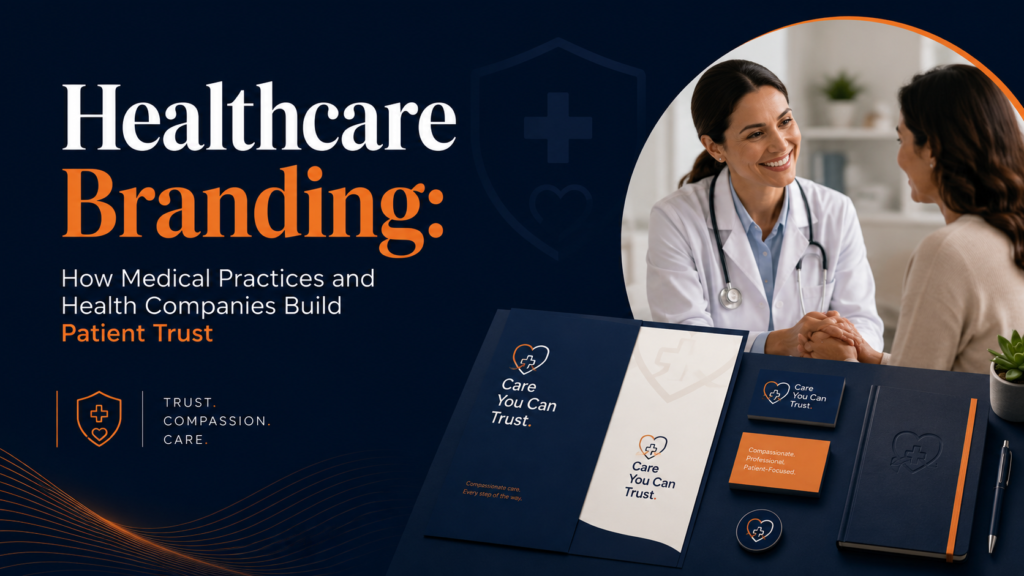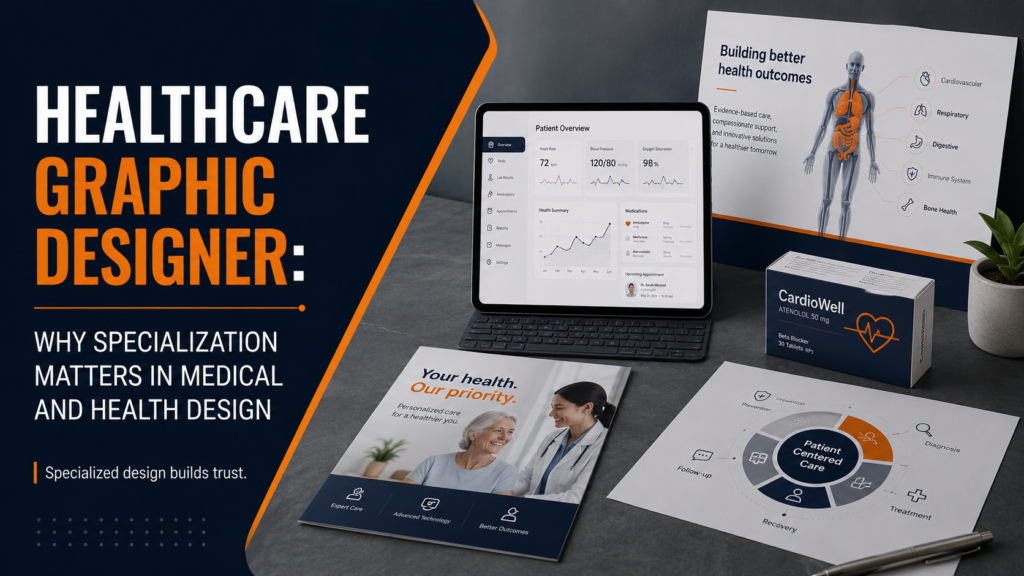
Healthcare design is not like designing a lifestyle brand. The stakes are different. Your visual identity directly influences how potential patients, partners, and investors perceive your credibility. A logo that looks like a clip-art download from 2005 signals one thing to a patient: this clinic is not serious.
Yet most healthcare founders hire graphic designers the wrong way — they pick whoever is cheapest on a freelance platform, or they ask a friend who “knows Photoshop.” The result is a brand that undermines the quality of the actual service being delivered.
This guide will help you choose correctly the first time.
1. Look for Designers with Actual Healthcare Portfolio Work
Ask to see healthcare-specific work before hiring anyone. A designer who has only worked with restaurants and fashion brands does not understand the visual language of trust that healthcare requires. Look for:
- Clinic and hospital branding projects
- Healthtech or medical device brand identities
- Healthcare website or app UI design
- Patient communication materials (brochures, appointment cards, discharge instructions)
If the portfolio is all tech logos and Instagram fashion posts, keep looking.
2. Evaluate Their Understanding of Healthcare Audiences
A good healthcare designer should be able to answer: who is this brand trying to reach, and what does that audience need to see to feel confident? Different healthcare segments require very different visual approaches:
- General practice clinics: Approachable, warm, community-focused
- Specialist medical centres: Technical credibility, precision, expertise signalling
- Mental health platforms: Calm, safe, non-clinical, destigmatising
- Healthtech startups: Modern, innovative, data-driven
Ask the designer to explain how they would approach your specific audience. If they give you a generic answer about “clean lines and modern design,” that is a red flag.
3. Check Their Process, Not Just Their Output
Great healthcare design does not start with opening Illustrator. It starts with research — understanding your competitors, your audience, and the emotional territory you want to occupy.
A designer with a strong process will talk to you about brand strategy before showing you any visual concepts. They will ask about your values, your competitors, and your long-term vision. A designer who immediately shows you three logo options without asking any of these questions is skipping the most important step.
4. Understand What You Are Actually Buying
Many healthcare brands hire a designer for a logo and are surprised when the result does not solve their actual problem. A logo alone is not a brand. What you actually need is:
- A logo system (primary logo, alternative versions, icon)
- A brand colour palette with accessible contrast ratios
- A typography system
- Basic brand guidelines your team can follow
If a designer quotes you for a logo only without mentioning any of the above, ask specifically about each element and what is included.
5. Ask About File Delivery and Ownership
This matters more than most founders realise. You need to own your brand files outright. Ask explicitly:
- Do I receive the source files (AI, PSD, or Figma)?
- Do I own full intellectual property of the final design?
- What formats do you deliver (SVG, PNG, CMYK PDF, RGB PDF)?
Any designer who refuses to provide source files or charges extra for them is not the right partner for a healthcare brand building for the long term.
6. Red Flags to Avoid
- No discovery process — they start designing immediately without asking questions
- Portfolio with stock images passed off as original work
- No brand guidelines included in the deliverables
- No revisions included or unreasonable limits on feedback
- Cannot explain why they made specific design choices
- Promises extremely fast turnaround without understanding the scope
The Right Fit
The right healthcare designer is someone who understands your audience, has relevant experience, explains their thinking clearly, and delivers work you own completely. Take your time to evaluate properly. Your brand is the first thing a potential patient or investor sees — it should represent your quality accurately.
If you are looking for a graphic designer with healthcare branding experience, read about the healthcare design service here or get in touch to discuss your project.